 l’autre bande dessinée

Filles Perdues
Faut-il encore présenter Alan Moore ? Miracle Man, Swamp Thing, V for Vendetta, Watchmen, From Hell, The League of Extraordinary Gentlemen — l’homme compte à son actif une bibliographie impressionnante, constellée d’œuvres importantes et incontournables. Autant dire que la conclusion longtemps attendue de l’un de ses projets maudits[1] était un événement en soi.
Et sans aucun doute, la sortie de Lost Girls fut un événement, que ce soit par le choix de son éditeur (le modeste Top Shelf[2] ) ou par le sujet sulfureux du livre — et de commenter ici l’indignation des ayant-droits de Peter Pan,[3] d’évoquer là le pari financier d’un premier tirage audacieux (40,000 exemplaires d’un ouvrage à $75), ou encore de rapporter les déclarations d’Alan Moore, répétant à qui voulait l’entendre qu’il n’était pas question ici d’érotisme, mais bien de pornographie.
Quelques mois plus tard, toute cette excitation est retombée, Top Shelf en est à son troisième tirage de l’imposant coffret, et Alan Moore se prépare à convoler en justes noces avec sa dessinatrice, Melinda Gebbie. Et pour nous, lecteurs, c’est enfin l’occasion de découvrir calmement ce que peut bien offrir ce Lost Girls.
Procédons à un rapide rappel de l’histoire : recourrant au même procédé que pour la League,[4] Alan Moore force la rencontre de trois personnages littéraires, trois femmes qui vont partager leurs expériences sexuelles sur fond de déclenchement de guerre mondiale. On trouvera ainsi l’Alice de Lewis Caroll, la Wendy de Peter Pan et la Dorothy du Wizard of Oz, dont les trajectoires se croisent dans un hôtel situé en Autriche.
Partant de ce point de départ séduisant, Alan Moore s’attache à déployer toutes les techniques narratives qu’on lui connaît, jouant sur les mises en page, les échos narratifs, le tout étant organisé dans un système complexe qui n’est pas sans évoquer des œuvres oulipiennes comme La Vie mode d’emploi de Georges Pérec. Ainsi, chacun des trente chapitres qui composent ce récit comptent huit planches (évoquant la longueur du côté d’un échiquier, motif récurrent de Through the Looking-Glass), chacune des trois narratrices aux voix bien distinctes se voit attribuer une mise en page spécifique, ainsi qu’un champ symbolique bien identifié.
Parsemant le texte de citations et références aux trois œuvres inspiratrices, jouant avec les renvois entre l’histoire et l’Histoire, Alan Moore ne peut s’empêcher de semer des échos, et de vouloir forcément livrer un ouvrage à tiroirs, un récit à clé — jusqu’à l’objet livresque lui-même, livre blanc sous les jaquettes, qui renvoie au «white book» de Rougeur, recueil de nouvelles et illustrations licencieuses.
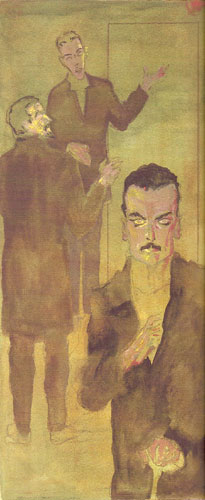
Cette érudition s’étale d’ailleurs dans tout l’ouvrage, évoquant des auteurs ou artistes qui, en leur temps, ont fait scandale, depuis Egon Schiele (arrêté pour ses dessins érotiques et une suspicion de détournement de mineur) jusqu’à Oscar Wilde (condamné à deux ans de travaux forcés pour homosexualité), en passant par les moins connus Aubrey Beardsley et Franz von Bayros, dans la volonté d’établir avec eux une sorte de filiation.
Cette revendication d’héritage s’accompagne d’une volonté de justification qui s’exprime directement dans le chapitre d’inceste, où Alan Moore prend à son compte le personnage de Rougeur pour revendiquer son droit à la pornographie la plus extrême. Le personnage de Rougeur se révèle par la suite avoir été un talentueux faussaire — en écho avec Pierre Louÿs,[5] et sans aucun doute avec Alan Moore lui-même, ce dernier livrant là une œuvre qui laisse la part belle aux amours sapphiques.
Il faut d’ailleurs reconnaître que dans la constitution de Lost Girls, Alan Moore tient également du faussaire, jouant sur une thématique très éloignée de ce que l’on lui connaissait jusque là. Mais à la différence de Rougeur, l’auteur des Watchmen tire un peu à la ligne, et livre un récit plus fastidieux que pornographique. A la pornographie, il emprunte le principe d’accumulation — accumulation des accouplements en général, mais surtout accumulation des combinaisons possibles, à tel point que l’ensemble finit par prendre des allures d’inventaire vaguement ennuyeux.
Et finalement, toute cette débauche ne réussit pas à dépasser la gangue oppressante du système narratif, un système qui se rappelle sans cesse au lecteur. La recherche d’une richesse formelle se fait alors sans subtilité — les artifices devenant par trop visibles, chaque chapitre devenant alors l’occasion d’une nouvelle performance. Il y a là une telle intellectualisation de l’ensemble, que le ressort pornographique disparaît, écrasé sous la surabondance de symboles et de renvois savants.
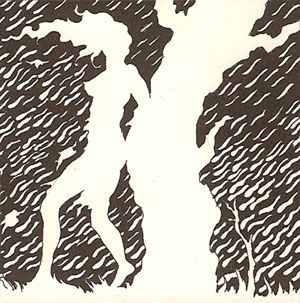
On pourrait sans doute aussi mettre en cause le dessin de Melinda Gebbie, souvent trop appliqué, et dont le principal défaut réside dans le choix de la couleur pour la majeure partie de l’ouvrage. En effet, les rares planches en noir et blanc sont finalement celles où s’exprime véritablement une sensualité raffinée et précise, loin du clinquant un peu inutile des illustrations en couleur.
Ainsi, si Watchmen et la League présentaient, chacun à leur manière, une déconstruction donquichottesque de la figure populaire du héros, le propos de Lost Girls apparaît moins clairement, souffrant plutôt d’une absence de véritable message derrière une maîtrise narrative trop démonstrative.
Le Larousse définit la pornographie comme étant la «représentation complaisante de sujets, de détails obscènes, dans une œuvre artistique, littéraire ou cinématographique». Et finalement, au-delà des actes de débauche en tous genres, c’est peut-être simplement dans la complaisance d’un auteur au système trop bien huilé que Lost Girls touche à la pornographie.
Notes
- Pour mémoire, les six premiers chapitres de Lost Girls furent publiés en 1991 dans l’anthologie Taboo, et publiés en deux recueils par Kitchen Sink Press. Ce n’est finalement qu’en Août 2006 (soit quinze ans après la publication des premières pages) que l’aventure Lost Girls se conclut avec la sortie du coffret et de ses trois volumes chez Top Shelf. Ne reste donc plus que l’ambitieux Big Numbers, mais peu d’espoir de ce côté-là.
- Préféré par ailleurs à DC pour la suite de la League of Extraordinary Gentlemen, épilogue d’une collaboration passée pour le moins tumultueuse.
- Le Great Ormond Street Hospital, à qui J.M. Barrie avait légué les droits de son livre, et dont les protestations ont finalement poussé Top Shelf à ne pas publier Lost Girls au Royaume-Uni avant l’échéance de ces droits, soit fin 2007.
- Dont la création est postérieure au projet de Lost Girls.
- Auteur des Chansons de Bilitis qu’il avait fait passer pour les traductions d’une œuvre écrite par une poètesse grecque contemporaine de Sappho.

Melinda Gebbie & Alan Moore sur du9 :
-
 Neonomicon / Providence
de Jacen Burrows & Alan Moore -
 La coiffe de naissance
de Eddie Campbell & Alan Moore -
 The League of Extraordinary Gentlemen : Black Dossier
de Alan Moore & Kevin O'Neil -
 La Ligue des Gentlemen Extraordinaires
de Alan Moore & Kevin O'Neil -
 Swamp Thing (t1) Racines
de Steve Bissette & Alan Moore & John Totleben





Super contenu ! Continuez votre bon travail!